

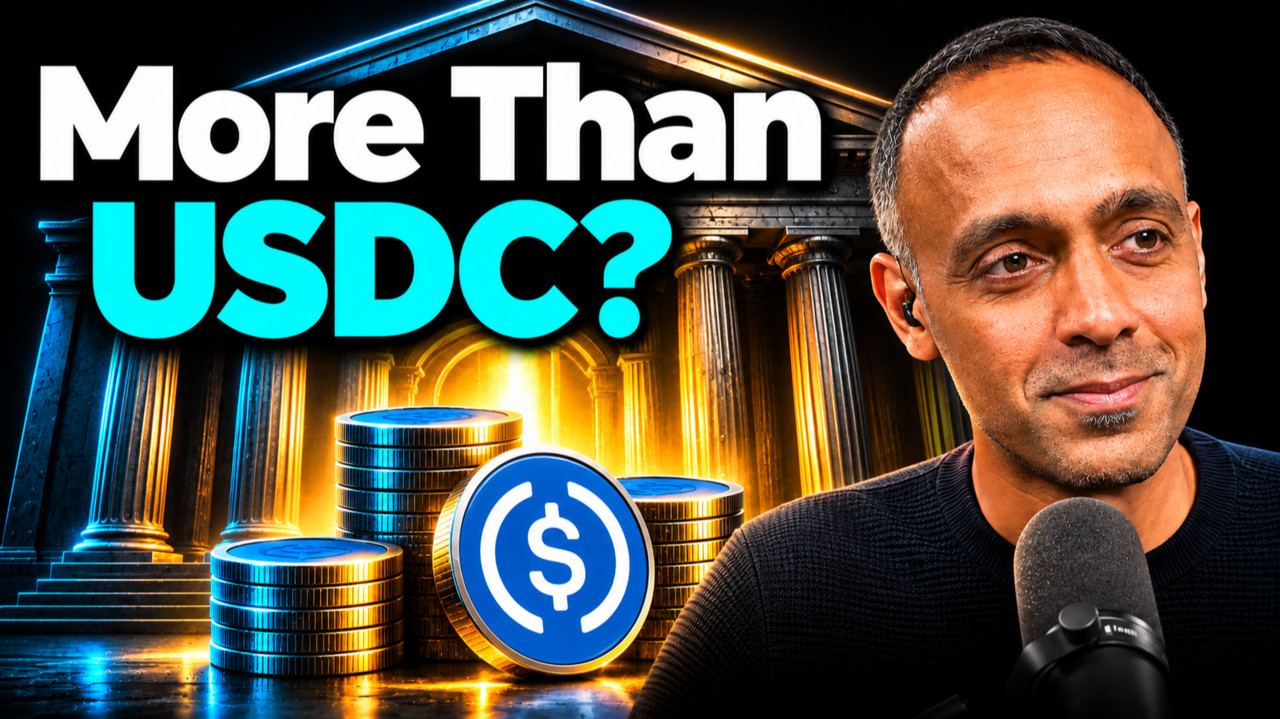
We sat down with Gagan Mac, VP of Product & Engineering at Circle, arguably the biggest publicly traded company in the world focused no stablecoin adoption. This is a conversation about product and strategy. What follows is his view as the Circle executive. We haven’t verified all of his claims, and we don’t endorse all the views he shares on Circle the company, their L1 Arc, or stablecoin offerings like USDC and EURC.
That said, we were eager to talk to someone on the inside of the $16B company that’s been market leading issuer of stablecoins (USDC since 2018). Both Nomatic and I regularly use USDC as a unit of account, a SoV, and as a capital asset for running DeFi strategies like liquidity provisions.
Our goal was to understand what’s next for Circle now that their flagship EVM L1 Arc has launched and they’ve attracted $600M TVL to Arc since mid-September.

What Gagan argued:
Circle’s pitch: Gagan calls Circle “a neutral market infrastructure company” serving enterprises, developers, and agents. I understand the mission statement but I would debate anyone calling a for-profit centralized issuer of stablecoins anything but neutral.
Why USDC leads: Network effects in place since 2018, years of regulatory and reserve work, and CCTP, which he calls “TCP/IP for moving money.” This claim I can verify having experienced Circle USDC’s growth as an onchain investor and have come to trust reliability and consistent UX of using USDC.
Why Arc is an L1: He cites institutional validators, USDC as the gas token, and subsecond finality. My skepticism ties back to the experience of watching most L1s fall flat on their face post-launch, but Arc is far too new to make any snap judgements, especially one with the distribution, partnerships, and treasury to incentivize use of USDC. We’re eager to watch Arc DeFi grow, with standout yield opportunities we’ve identified in DeFi Frontier on Aave, Morpho, Uniswap, and Aero.
Neobank stablecoins: He says the idea of every neobank launching its own stablecoin will be much harder to pull off than DeFi builders realize. I think technically, it’s never been easier to launch a stablecoin, but liquidity-wise, it’s never been more competitive unless you’re USDC, USDS, USDe, or USDT.
AI agents: Gagan says machines will choose USDC for its liquidity and programmability, and he describes Circle’s work on x402 and nanopayments. From a trust standpoint, I agree, but I remain open to the idea that agents will seek greater assurances than Circle to transact in uncensorable stablecoins, if those unstoppable stablecoins ever exist and can compete in terms of liquidity and access.
Circle Is Beating Payments Incumbents: Nomatic pointed out in 2025, Visa did $14.2 trillion in payments volume, Mastercard did $10.6 trillion, but USDC onchain transfers totaled a whopping $18.3 trillion! So USDC transfers are already competing with what is the global standard in people's minds for financial transactions, even though stablecoins are still less understood by the general public compared to Visa/Mastercard.
Before we go, be sure to check out the Pharos review and rating for USDC. If you watched our prior episode with Pharos Founder TokenBrice, he specifically called out USDC as an example of the safest, most reliable stablecoin, giving it an A+ rating.

Listen to the full episode with Gagan Mac on The Edge Podcast below!
| CONTINUE BELOW FOR PODCAST LINKS |
Thanks to our sponsors and who make this content free for you to enjoy!


Listen below on Spotify, Apple, and YouTube or check out our Linktree here!

🔗 Guest Links 🔗
► Circle website: circle.com
► Circle on X: x.com/circle
► Gagan on X: x.com/gaganmac
📺 More Episodes You Might Enjoy

DISCLAIMER: Nothing said on The Edge Podcast is a recommendation to buy or sell tokens or securities. This content is for educational and entertainment purposes only. Nothing shared here is financial advice. Any views expressed by hosts or guests on the show are solely their opinions. Always do your own research. DeFi Dad, Nomatic, and guests may have positions in the assets or other matters discussed in this podcast.

