

As Ethereum's biggest upgrade since the Merge approaches, it’s shocking how most people still value Ethereum the wrong way—like a business, treating fees as revenue, and trying to force fit ETH into a DCF framework.
In a new article by Head of Venture at Varys Capital, Tom Dunleavy argues that's all backwards. Fees aren't revenue. They're friction in an L1 like Ethereum, and the one number a winning network drives toward zero. ETH fees have fallen from over $200 per transaction at the 2021 peak to about $0.20 today, while the network now processes more than 3x the transactions. Falling fees are the network winning, not dying.
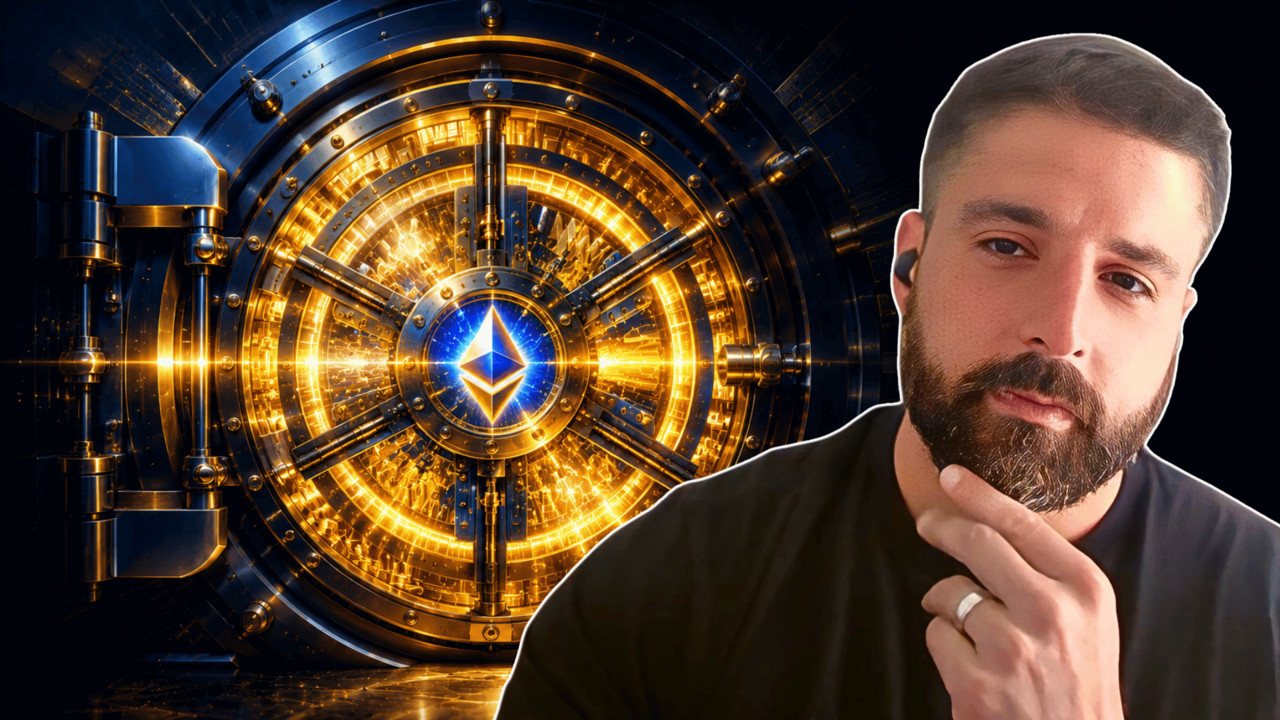
So what's the right way to value ETH? Stop thinking of Ethereum as a company and start thinking of it as a vault. The vault holds roughly $250B today: stablecoins, tokenized real world assets, staked ETH, canonical bridge value, tokenized Bitcoin, and DeFi activity.
If Ethereum is a vault, ETH is the lock. Under proof of stake, the only way to attack Ethereum is to acquire and control its staked ETH, which means the security of the vault and the market value of the asset securing it are now the same variable. Right now the lock is cheaper than the safe: all staked ETH is worth about $72B, protecting $250B in value. For the staked slice to properly match what it secures, ETH's fair value lands closer to $6,900 vs the current spot price of ETH being $1,700, as of this post. As stablecoins and tokenized assets scale into the trillions this decade, the same framework points us to a $20,000-$50,000 price for ETH, with a 2030 base case of $55,000 and a bull case of $138,000.


Having covered quite a few of these points in prior Edge Podcast episodes with investors like William Mougayar, Leo Lanza, and Ryan Berckmans, Tom introduces some refreshing new ideas for how to value ETH, while also tackling the best objections we’ve heard from ETH bears such as "Circle can just freeze USDC" or "Ethereum is just Linux, and that’s why it’s overvalued.”
In this new episode, he explains why both objections miss obvious fundamental points: Circle still relies on Ethereum’s security even if it ever freezes USDC while Ethereum buys its own security from inside, in its own asset ETH, while Linux or DTCC borrow theirs from outside. That's why ETH has to be valuable, and Linux never did.
Learn more about why Tom believes the vault (Ethereum) won't stop growing, and hence the lock (ETH) is simply due for a repricing. Listen to the latest episode of The Edge Podcast below!
| CONTINUE BELOW FOR PODCAST LINKS |
Thanks to our sponsors and who make this content free for you to enjoy!


Listen below on Spotify, Apple, and YouTube or check out our Linktree here!

🔗 Guest Links 🔗
► Tom Dunleavy on X: x.com/dunleavy89
► Tom's Ethereum article on X: x.com/dunleavy89/status/2059717202392359118?s=20
📺 More Episodes You Might Enjoy



DISCLAIMER: Nothing said on The Edge Podcast is a recommendation to buy or sell tokens or securities. This content is for educational and entertainment purposes only. Nothing shared here is financial advice. Any views expressed by hosts or guests on the show are solely their opinions. Always do your own research. DeFi Dad, Nomatic, and guests may have positions in the assets or other matters discussed in this podcast. DeFi Dad and Nomatic hold ETH.
